
Carbon fibre fabrics and cloth
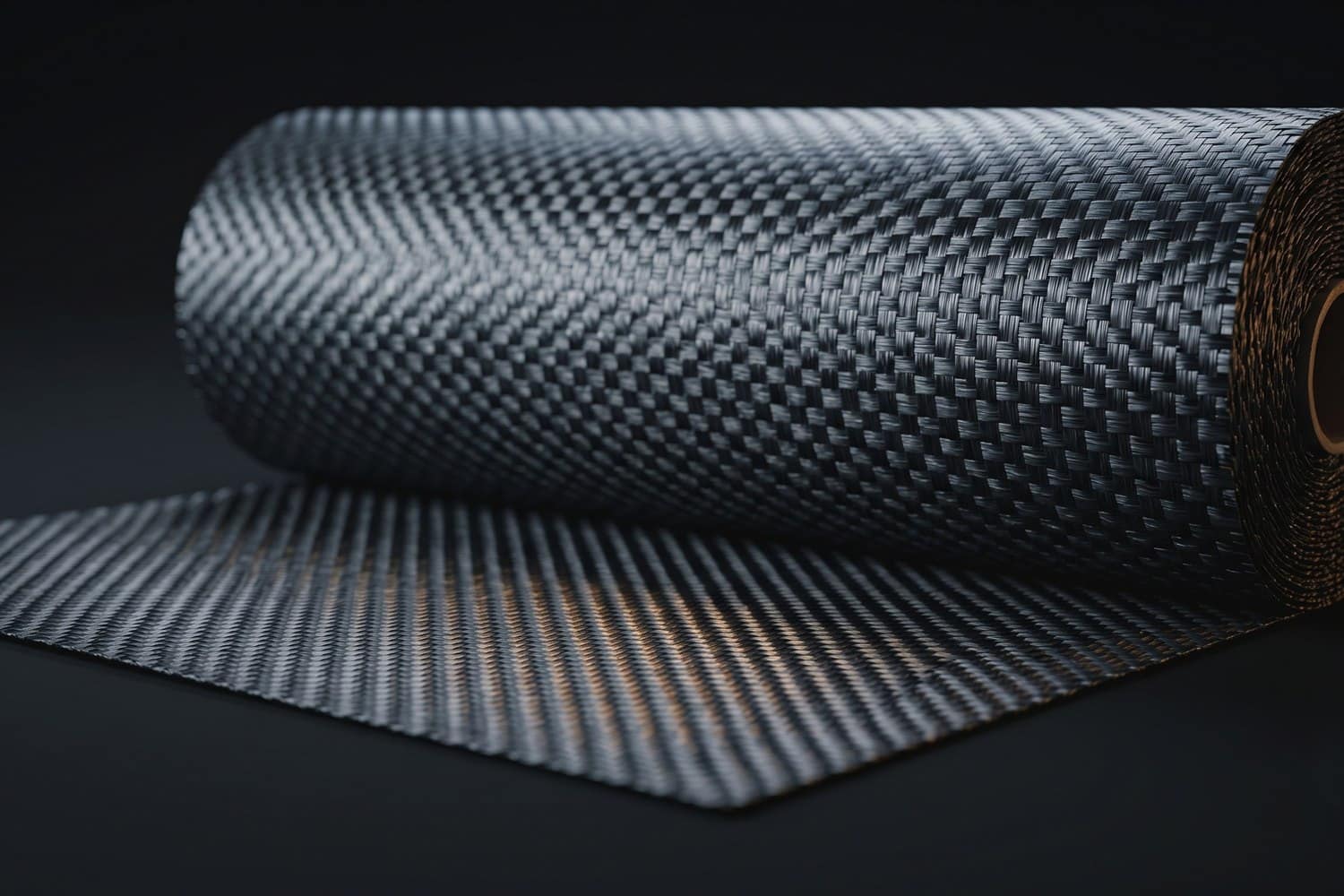
Dry carbon reinforcement, supplied by the metre or by the roll. Supplied across Dubai, Abu Dhabi, Sharjah and the wider UAE, with documentation requirements agreed at quotation stage.
Specification
| Property | Typical value |
|---|---|
| Weaves | Plain, 2 x 2 twill, 4 harness satin, unidirectional, biaxial, triaxial, quadraxial |
| Areal weight | 80 to 600 gsm |
| Width | 1000, 1270, 1500 mm |
| Fibre grades and tow | 3K, 6K, 12K, in T300 and T700 class |
| Supply form | Linear metre, 25 m roll, 50 m roll |
| Compatible resins | Epoxy, vinyl ester, confirmed per application |
Available range
- Standard weights
- 200 gsm in 3K plain and 2 x 2 twill, and 400 gsm
- Full weight range
- 80 to 600 gsm
- Tow sizes
- 3K, 6K and 12K
- Widths
- 1000, 1270 and 1500 mm
- Supply form
- Linear metre, 25 m roll, 50 m roll
Other weights and weaves to order. The weave breakdown below sets out what each construction suits.
Tolerances and material property data are in the technical datasheet. This family is dry reinforcement. Pre-impregnated material is supplied as carbon fibre prepreg, and resin systems are supplied within our structural strengthening systems rather than sold loose.
What carbon fibre fabric is
Carbon fibre fabric is dry reinforcement: continuous filaments gathered into tows, then woven or stitched into a sheet material and supplied on a roll with no resin in it. The resin is added by you, during wet layup, vacuum infusion or resin transfer moulding, which is the difference between this family and prepreg.
Tow size describes how many filaments are bundled together. A finer tow produces a tighter, more regular surface pattern, and a heavier tow covers area faster and reads as a visibly larger weave from a distance. Areal weight describes how much fibre there is per square metre, and together with the number of plies it decides how thick the finished laminate ends up.
Because the fabric arrives dry, the resin content of the finished part is decided by whoever does the layup rather than at the mill. That is the trade for the flexibility: dry fabric drapes into shapes prepreg cannot reach, needs no freezer and no oven, and costs less to get started with.
The weaves we supply
Seven constructions, and the choice between them is usually decided by how much curvature the part has and whether the surface is seen. Weights and tow sizes below are the ones held as standard in that construction. Anything in the wider 80 to 600 gsm range is quoted on enquiry.
Plain weave
Each bundle passes alternately over and under, giving a tight, stable cloth with a fine chequerboard look. It holds its shape on the bench and resists distortion, which makes it the easiest to cut and position, but it is the least willing to drape over curves. Good for flat and gently curved panels.
- Standard weight200 gsm
- Standard tow3K
2 x 2 twill
Bundles pass over two and under two, producing the diagonal pattern most people picture when they think of carbon fibre. Twill drapes far better than plain over complex shapes and is the most popular choice for cosmetic surfaces. It is the default for most general work.
- Standard weights200 and 400 gsm
- Standard tow3K
4 harness satin
A looser interlacing that drapes the best of the woven options and lies very flat, which suits tight curves and demanding shapes. The trade is that it distorts more easily during handling, so it needs a more careful hand and more care when cutting.
- Weights and towQuoted on enquiry
Unidirectional
Almost all fibres run one way, held with light cross stitching. This puts maximum stiffness along a single axis and is used for spars, stiffeners and reinforcing a known load path rather than for general skins.
- Weights and towQuoted on enquiry
Biaxial
Stitched rather than woven, with fibre laid straight in two directions. Because the fibres are not crimped over and under each other they work more efficiently than an equivalent woven cloth, at the cost of a thicker, less cosmetic surface.
- Weights and towQuoted on enquiry
Triaxial
The same stitched construction with fibre in three directions, which gets you closer to equal behaviour in plane without stacking three separate plies. Chosen for structural laminates where appearance does not matter.
- Weights and towQuoted on enquiry
Quadraxial
Stitched fibre in four directions in a single ply. It is the closest a single layer gets to behaving the same whichever way load arrives, and it saves handling and laying four separate plies to achieve it.
- Layup0 / +45 / 90 / -45
- Weight600 gsm
- TowQuoted on enquiry
Across all constructions: 80 to 600 gsm, in 3K, 6K and 12K tow, T300 and T700 class, in 1000, 1270 and 1500 mm widths. Tell us the weave, the areal weight in gsm and the width together and we can quote in one pass.
Matching fabric to process and sector
For hand layup and wet lamination, a mid weight twill is the usual starting point, because it wets out predictably and tolerates being repositioned. For vacuum infusion, fabric choice interacts with how resin travels through the stack, so the weave and the areal weight want deciding alongside the flow media rather than after it.
In marine work, fabric is used for hull reinforcement, deck stiffening and local repair, usually in heavier weights where area coverage matters more than surface finish.
In automotive and motorsport, twill carbon is used for body panels, aero surfaces and interior trim, where the visible weave is part of the specification.
In aerospace, UAV and industrial work, unidirectional and multiaxial fabrics carry most of the structural load, with a light woven ply at the surface where appearance or handling calls for it.
What to send us when you ask for a quote
Fabric is specified in the units it is made in, so an enquiry that gives weave, areal weight in gsm and roll width can be priced immediately, while one that asks for carbon cloth cannot.
Tell us the process you are running, whether that is hand layup, infusion or resin transfer moulding, because it changes which construction we point you at. Tell us the shape, particularly how tight the tightest radius is, since that decides whether plain, twill or satin is right.
Say whether the surface is visible in the finished part, and whether you need material by the linear metre or by the roll. If you are matching fabric to an existing part or an existing specification, send that specification rather than describing it.
Resin compatibility is confirmed against your application, and documentation requirements are agreed at quotation stage, so raise both with the enquiry rather than after the order.
Where it is used
Composite lay-up and infusion
The core use: dry cloth you wet out yourself, by hand or under vacuum, in the shape you need.
Aerospace
Unidirectional and multiaxial plies carrying the structure, with a woven ply where the surface shows.
Marine
Hull reinforcement, deck stiffening and local repair, usually in the heavier weights.
Automotive
Body panels, aero parts and trim, where a twill surface is part of the specification.
Industrial
Tooling, guards, covers and one-off parts, where making it yourself beats buying it finished.
Common questions
What is the difference between carbon fibre fabric and prepreg?
Fabric is dry reinforcement with no resin in it, so you add the resin during layup or infusion. Prepreg arrives already impregnated at a controlled resin content and needs frozen storage plus heat to cure. Fabric is more flexible to work with, prepreg is more repeatable.
Which weave should I choose?
Plain weave is the most stable to handle and the least conformable. Twill drapes better and gives the diagonal pattern most people recognise, which makes it the usual choice for visible surfaces and curved parts. Satin is the most conformable and the flattest looking but needs more care when cutting. Unidirectional and multiaxial carry load most efficiently where the direction is known.
What does areal weight in gsm actually tell me?
It tells you how much fibre there is per square metre. Together with the number of plies it decides the thickness and the fibre content of the finished laminate, which is why it is the number a supplier needs rather than a target thickness.
Can I buy carbon fibre fabric by the metre rather than a full roll?
Yes. Fabric is supplied by the linear metre or by the roll. Tell us which you need at enquiry stage, because the two are quoted differently.
Which resins work with your carbon fibre fabric?
Epoxy and vinyl ester systems are the common pairings, and compatibility is confirmed against your specific application at quotation stage rather than assumed from the fabric alone.
Do you supply glass and aramid reinforcement as well as carbon?
Carbon is the core of this family. Glass and aramid reinforcement are supplied where an application calls for them, most often where electrical insulation or impact tolerance matters more than stiffness, and both are available in prepreg form as well.